Rivet
A cap and close post is a fastening item for reinforcement or decoration that is inserted through fabric with metal or similar parts and fixed by flattening the post with a setting tool or press.
المحتويات6 أقسام
Definition and Overview
A cap and close post is a fastener that is passed through fabric, leather, or other materials by its leg and fixed by deforming the opposite side. It can reinforce areas where load tends to concentrate with sewing alone, and is also used as an accessory that adds a metallic design element. After installation, it is in principle a permanent fastening component that is difficult to remove.
Unlike a press fastener, it does not have an opening and closing function and is mainly used for fixing and reinforcement. An eyelet protects the area around a hole, while a cap and close post differs in that it fastens multiple layers or parts together.
Materials and Structure
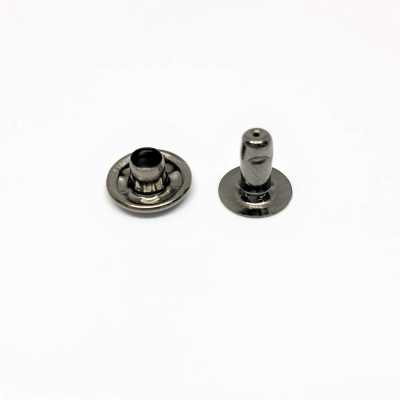
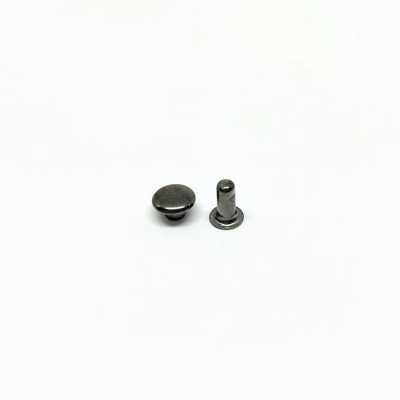
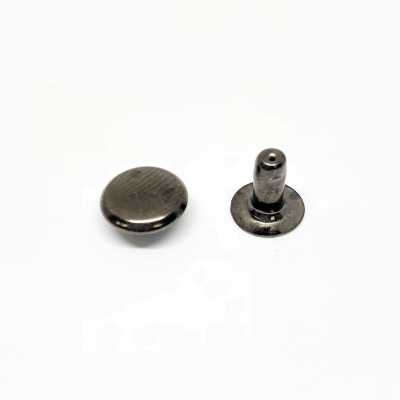
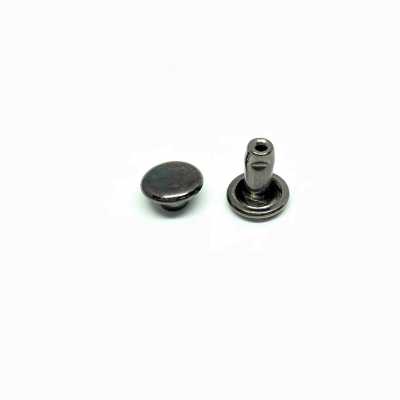
A typical cap and close post consists of a head visible on the front side and a leg or receiver part that passes through the fabric. Since the combination is determined for each product, parts with a different standard must not be mixed even if their appearance or diameter is similar.
Materials include metals such as brass, iron, and aluminum, and the surface may be plated or painted. Those with heads visible on both sides are sometimes called double-sided cap and close posts, while structures in which a receiver part or leg finish is visible on the back are sometimes called one-sided cap and close posts, but the naming varies by trading partner.
- Head: the decorative part that appears on the front side, such as round or flat types.
- Leg: the part that passes through the fabric and deforms during setting to secure the fastener.
- Receiver part: the component that receives the leg and fastens it; a washer is used together depending on the structure.
Size Indication and Installation
Size is often indicated by the diameter of the head. However, the leg length, compatible fabric thickness, and part combination also affect fastening strength, so selection cannot be based on diameter alone. Specifications should allow confirmation of the front-side diameter, color/finish, part configuration, and compatible fabric thickness.
For installation, use a setting tool compatible with the part and a hand press, or a press machine. Methods include making a pilot hole in advance with a hole punch and passing the leg through the fabric. Before mass production, perform trial setting with the same number of layers as the actual fabric and check the finish on both sides.
- Use a dedicated setting tool to prevent deformation or damage caused by a tool that does not match the part.
- Adjust setting pressure according to the part, fabric thickness, and whether interfacing or reinforcement material is used.
- After fastening, check for rotation, wobbling, pullout, surface damage, and crushing on the back side.
Main Applications
Cap and close posts are used at areas subject to pulling or repeated force, such as pocket openings, the base of belt loops, tabs, handles, and straps. They are commonly seen as reinforcement around pockets in denim products. In addition to bags, workwear, and outerwear, they are also used in costumes that make use of decorative appeal.
They are suitable not only for fastening fabric but also for layering and securing tape, leather, synthetic leather, and metal parts. However, on soft thin materials or highly stretchable fabrics, force tends to concentrate around the cap and close post, so reinforcement methods should be considered as well.
Points to Note When Selecting
If the leg is too short, it cannot be sufficiently set and will be more likely to pull out. Conversely, if it is too long, the back side may be overly crushed or the part may tilt. Fabric thickness should be judged not only by the outer fabric but by the actual combined thickness including interfacing, facings, and tape. Add pressing cloth or reinforcement interfacing as needed.
With metal products, rust, discoloration, and plating deterioration may occur due to sweat, moisture, washing, or storage conditions. For products that undergo washing processing or garment dyeing, also check the appearance and strength after processing. For uses that come into direct contact with the skin, confirm whether nickel-free is required and the plating specification to be used.
For products requiring needle detection, manage in advance the areas where metal cap and close posts are used and their effect on the needle detection process. Even if a part is said to be needle detector compatible, it is important to confirm in the actual process whether it meets the detection conditions and product specifications.
Frequently Asked Questions
What is the difference between a cap and close post and a press fastener?
A cap and close post is a component for permanently fixing and reinforcing fabric or parts, and it normally does not open or close. A press fastener is a component with a male and female part that is attached and detached to open and close. Even when they look similar, the applications, part configuration, and setting tools differ, so check compatibility when selecting.
How do you choose the leg length of a cap and close post?
Select it based on the thickness of the overlapping area, including not only the outer fabric but also interfacing, tape, and pressing cloth. If the leg is too short, fastening will be insufficient; if it is too long, it can cause crushing or tilting. Match the part and setting tool to be used, and judge by trial setting with the same material composition as mass production.
Can cap and close posts be attached to thin fabric?
Installation is possible, but if set only to thin material, hole widening, pullout, and tearing around the area are more likely to occur. Consider adding pressing cloth or reinforcement interfacing on the back side to distribute the load. The result varies depending on the fabric's weave density and stretchability, so confirm strength and appearance through testing.
- تصفّح منتجات Double cap rivet
- منتجات من خامة «Aluminum»
- منتجات من خامة «Brass»
- منتجات من خامة «Iron»
- منتجات من خامة «Metal»
- منتجات بنمط «For Pants»
- منتجات بنمط «For Outerwear/blousons/coats»
- منتجات بنمط «Outdoor»
- منتجات بنمط «For Uniforms/Workwear»
- منتجات بنمط «For Denim»
- منتجات بنمط «For Bags»
- تصفّح منتجات Press Fasteners And Eyelets